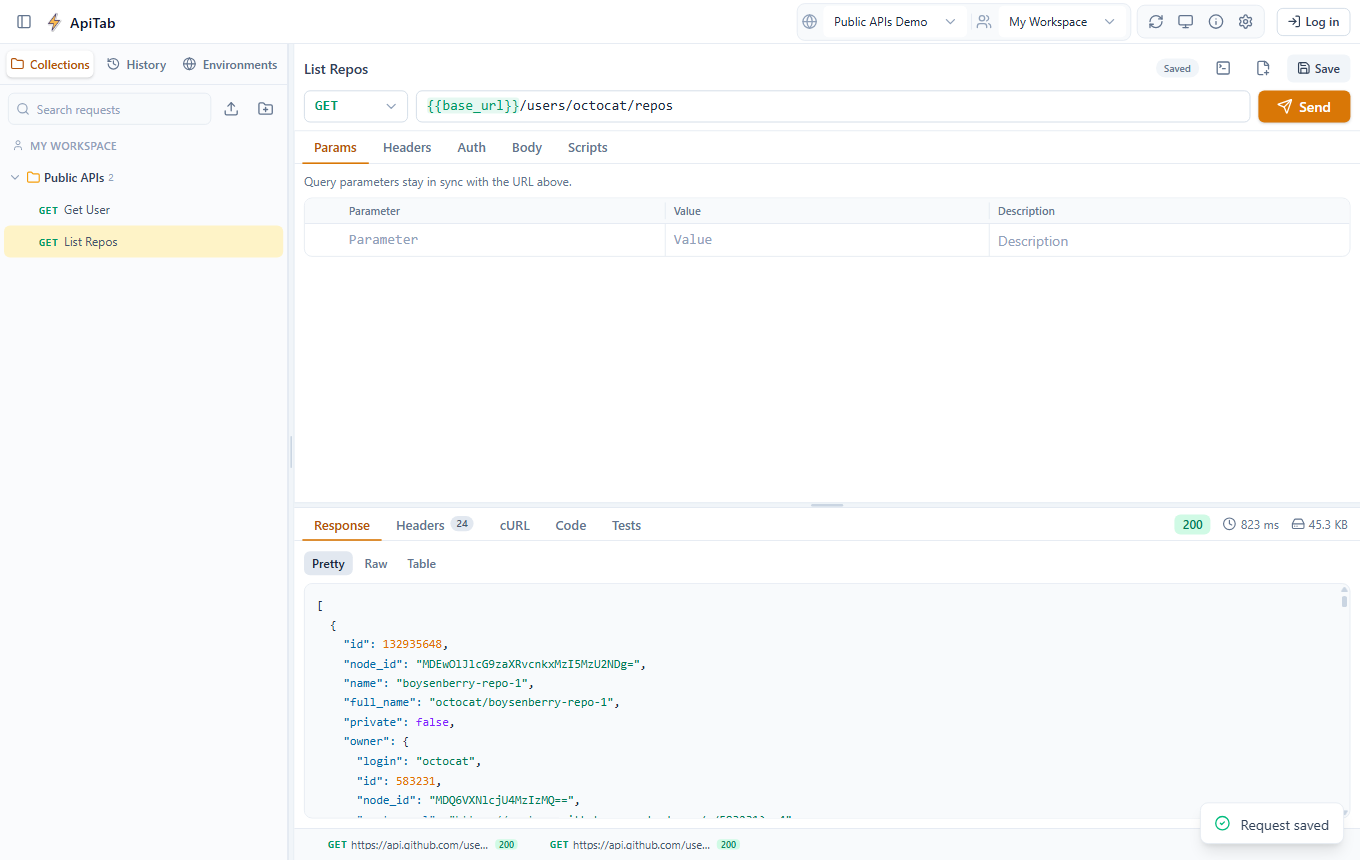
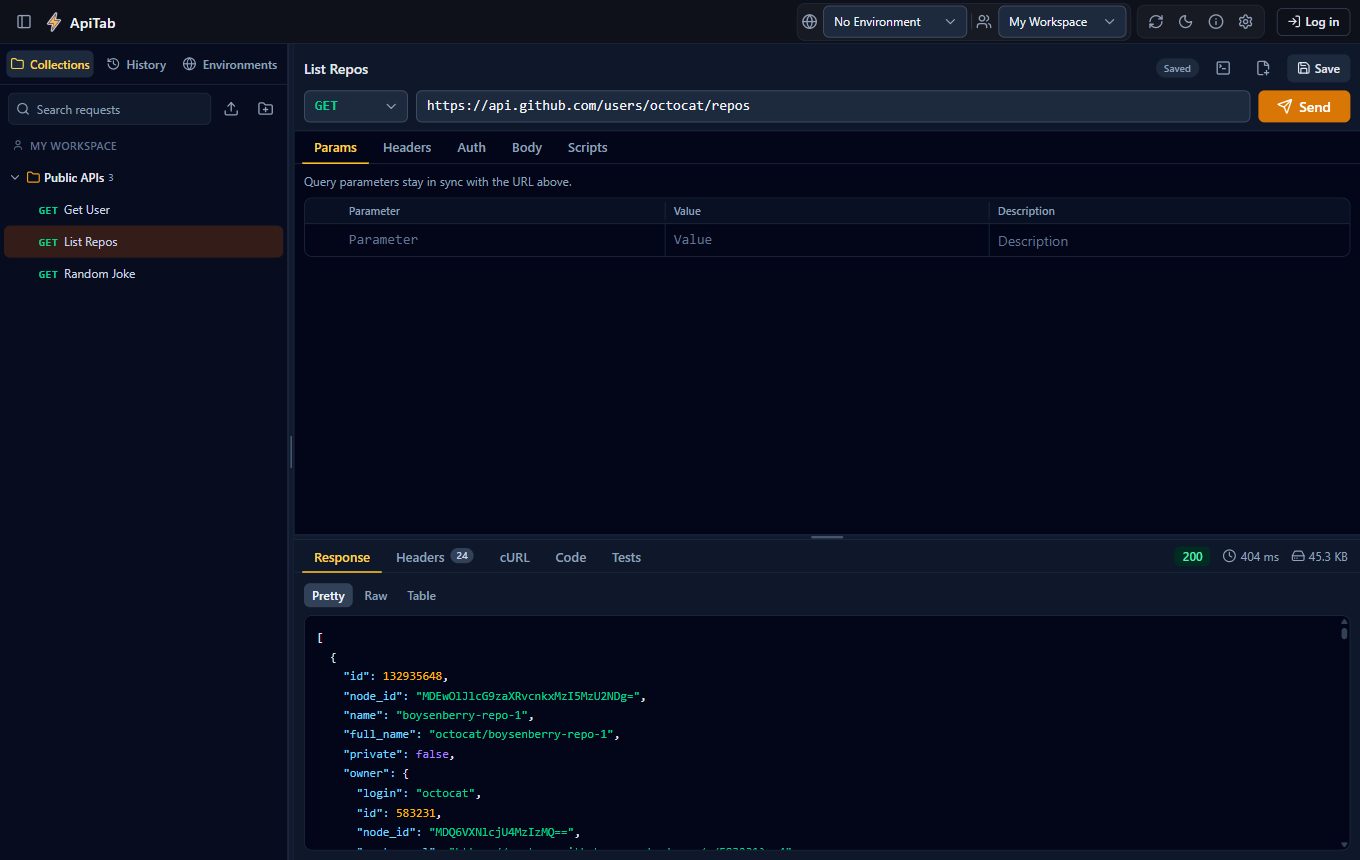
A self-hosted, open-source alternative to Postman — for any team that wants full control over their own API tooling.
Postman charges per user, every month, indefinitely — the price of standing still goes up as the team grows.
Postman is widely reported as slow to launch and resource-hungry, especially with larger collections. ApiTab is built lightweight from day one.
API keys, tokens, and request payloads pass through a third party's cloud by default.
Feature paywalls, pricing changes, and end-of-life decisions happen to us, not with us.
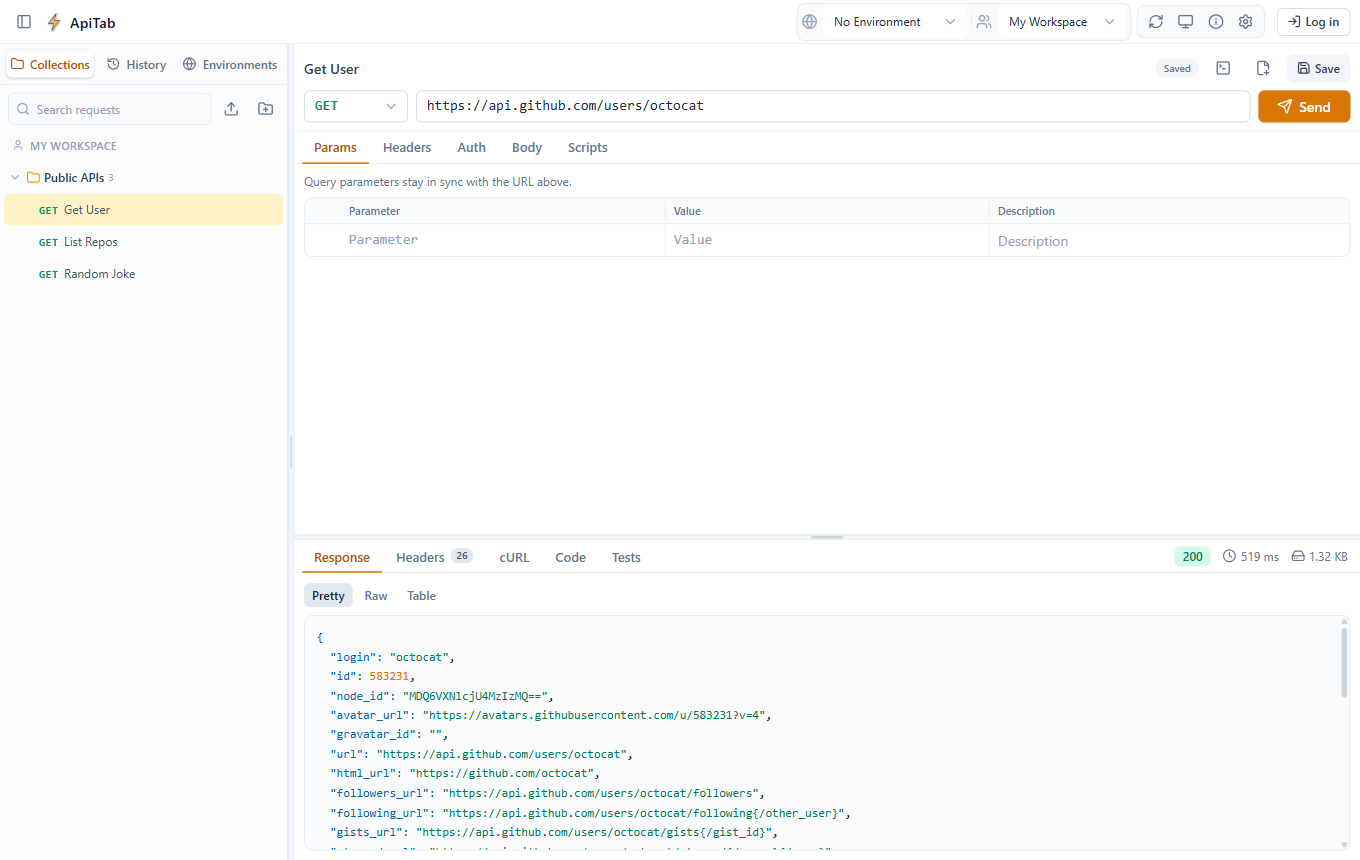
ApiTab is a full-featured API client — a desktop app and a browser extension — backed by a small self-hosted server you run yourself. Same collections, environments, and scripting your team already knows. Existing Postman collections import in one click, so switching costs nothing but a few minutes.
No per-seat fees, no annual renewal negotiation. Free, indefinitely.
API keys, tokens, and requests never leave infrastructure you own.
Open source (MIT) — you can audit, modify, or fork it at any time.
Uptime, retention, backups, and priorities are yours to decide.
All HTTP methods, auth, JSON/form/raw bodies
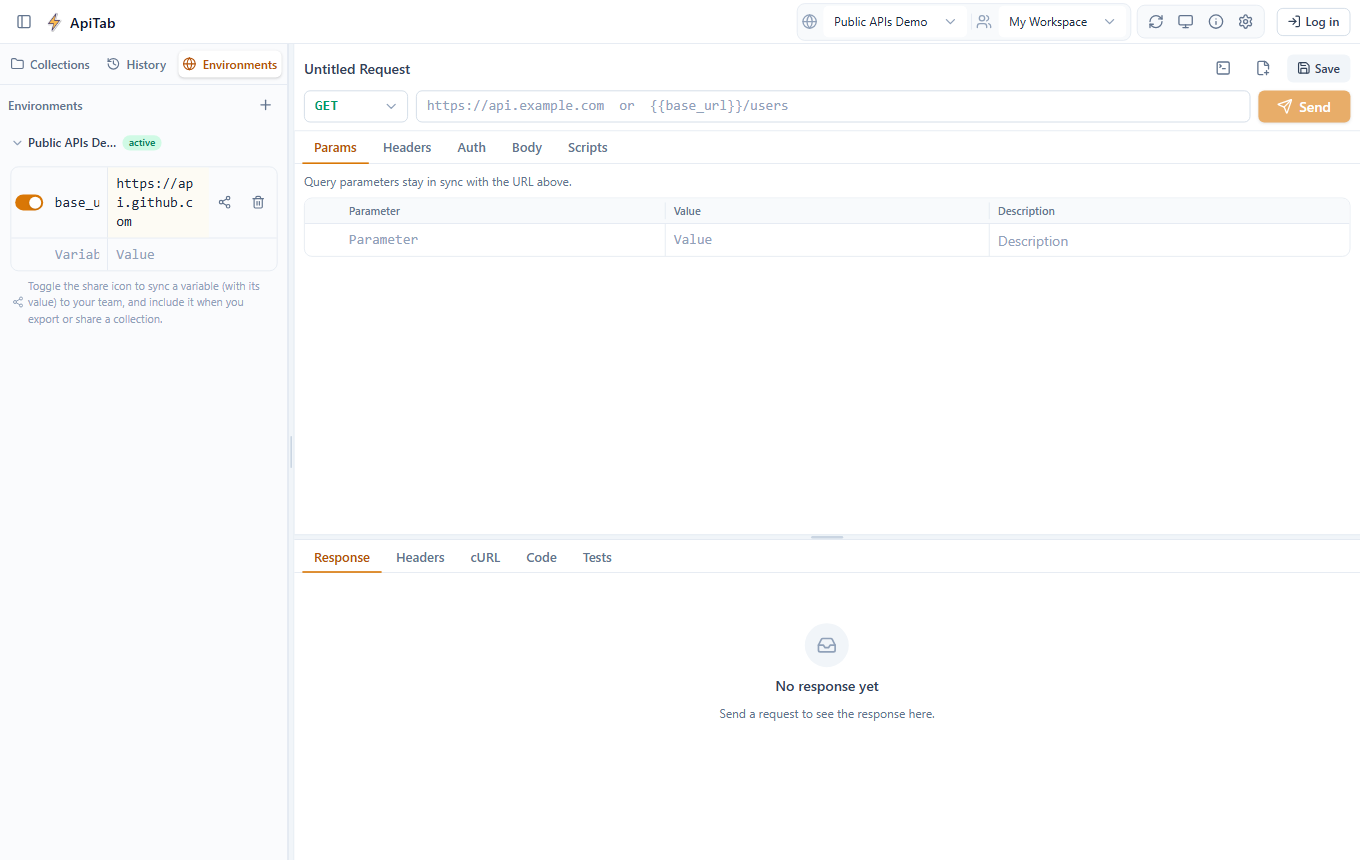
{{variable}} interpolation with autocomplete
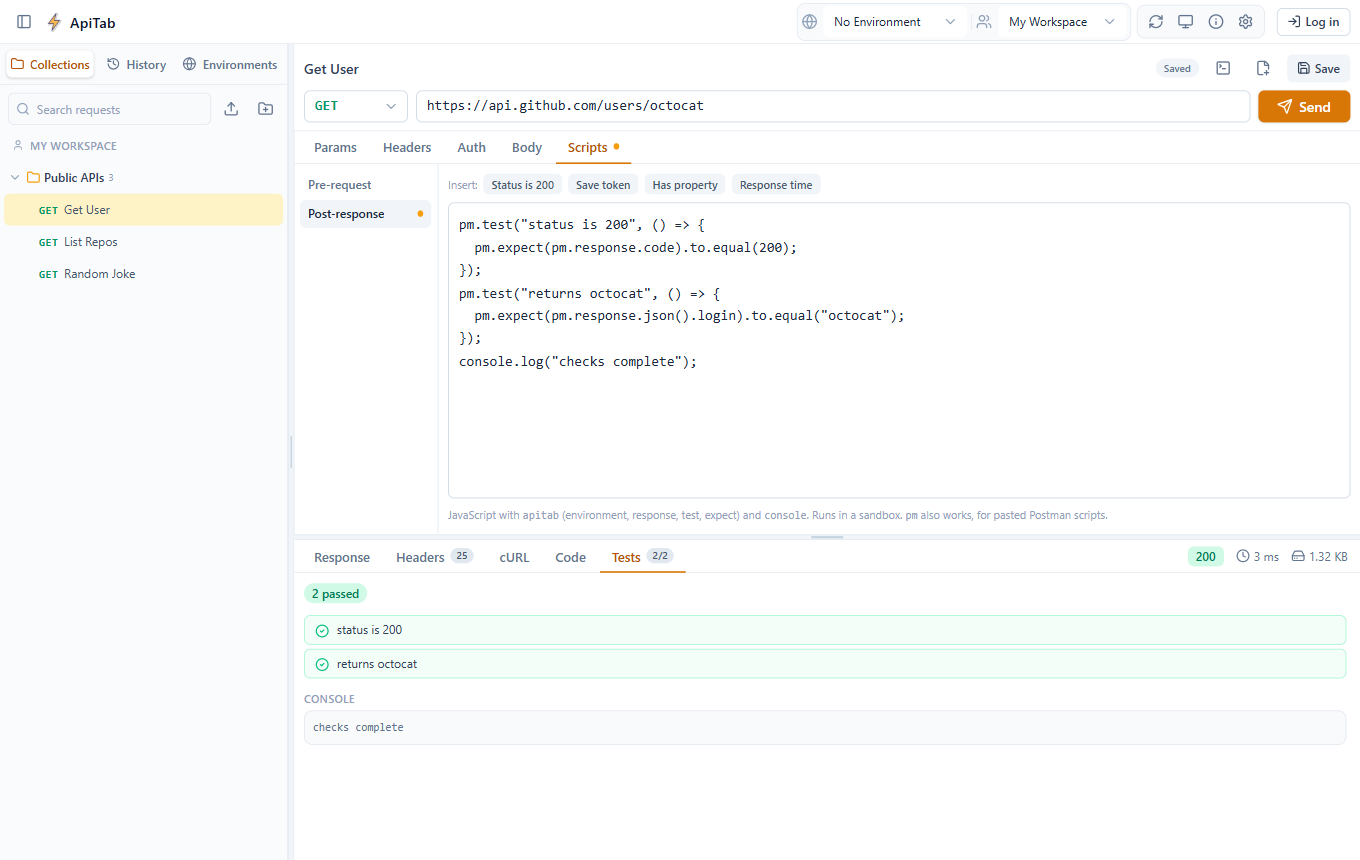
Postman-script-compatible test scripting
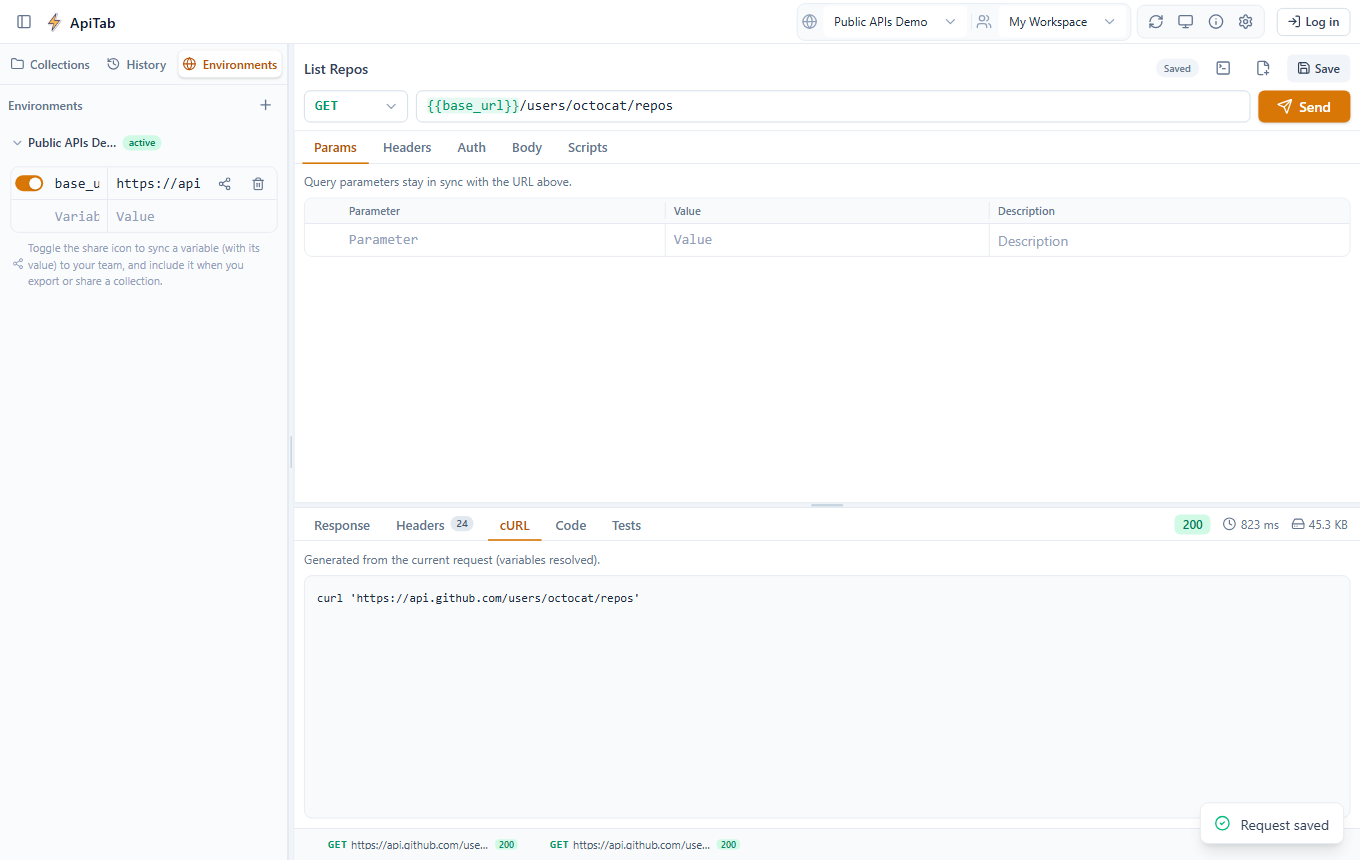
cURL, Fetch, Axios, PHP, Python snippets
Automatic, searchable, restorable
Share, sync, and collaborate live
cURL commands and Postman collections
Windows, macOS, Linux, Chrome, Firefox
{{$randomEmail}}, {{$guid}} and more — same $-syntax Postman uses
| Capability | ApiTab (self-hosted) | Postman |
|---|---|---|
| Pricing | Free, open source | $19–$49 / user / month (Team–Enterprise, billed annually) |
| Where your data lives | Your own server | Postman's cloud |
| Source code | Fully open (MIT) | Closed source |
| Collections, environments, history | ✓ | ✓ |
| Pre/post-request test scripts | ✓ | ✓ |
| Team sync & sharing | ✓ | ✓ |
| Fake data generators | ✓ | ✓ |
| Mock servers & API monitors | Not yet | ✓ |
You don't need feature-for-feature parity — just the part of Postman your team actually uses, without the rest of the bill.
Laravel 12 on PHP 8.2 — mature, widely supported
MySQL — standard, easy to back up and migrate
Token-based (Sanctum), open REST API under /api
Runs comfortably today on ordinary shared hosting
The software is already built, open source, and free. If it looks useful for your team, here's what it takes to self-host it.
What it takes to self-host it for your team
Spin up a small server (or reuse existing infra) and point a subdomain at it
Pilot it with your team for a few weeks alongside your current tooling
Decide on full rollout based on real usage
Thank You
Try it, break it, and tell us about it